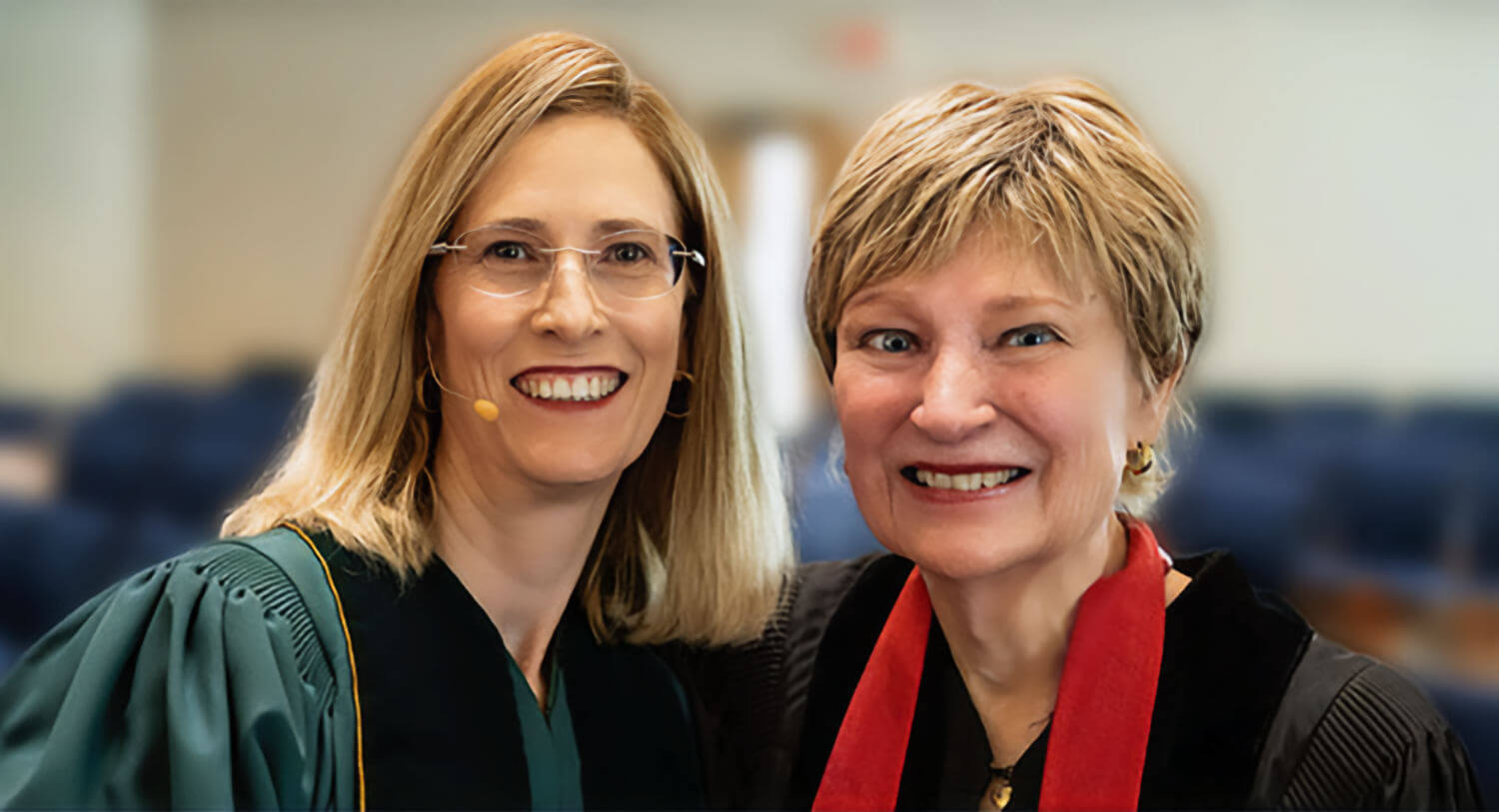
by Kendra Weddle, PhD., scholar-in-residence, Northaven United Methodist Church, Dallas, Texas
Jann Aldredge-Clanton died September 20, 2024 of ovarian cancer at Baylor hospital in Dallas, Texas. She was 78, and in typical Jann fashion, was writing and editing up to her final days, birthing another book of hymns called Healing Streams: Inclusive Songs, Prayers, and Readings for All Ages.
It is hard to imagine any stronger advocate for the divine feminine than Jann. When she read All We’re Meant to Be: Biblical Feminism for Today by Letha Dawson Scanzoni and Nancy A. Hardesty, the seed was planted for her to change how we imagine and experience God. A few years later, when she studied systematic theology in seminary, that seed sprouted into an epiphany. It remains the tagline on her website: “If God can include 3 persons, can’t God include 2 genders and more?”
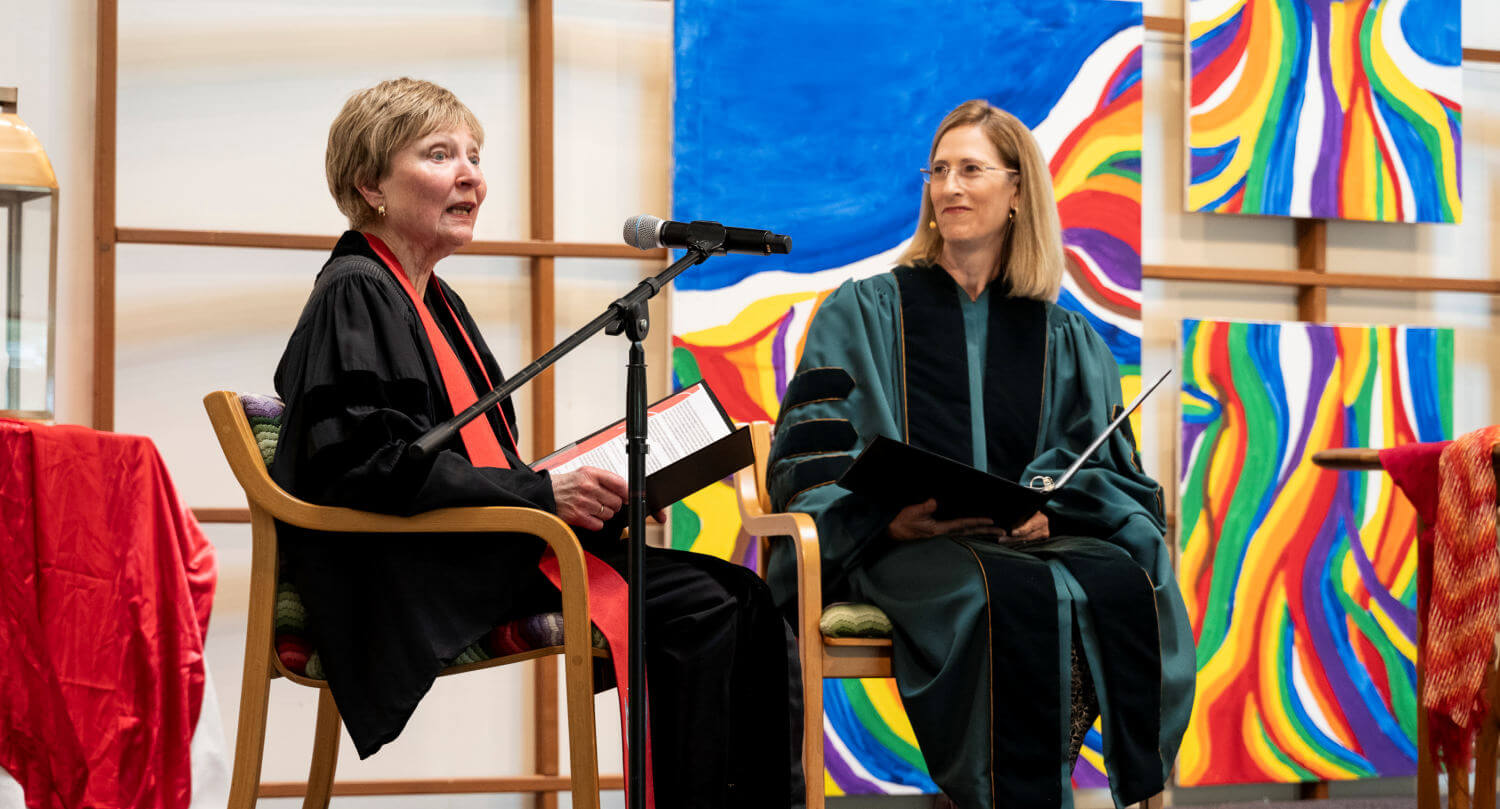
Jann called for affirmative action for the divine feminine saying such an approach is necessary to counter-balance more than two-thousand years of masculine language and images. On May 19, 2024 at Northaven United Methodist Church in Dallas, she went on to explain:
Genderless names and images of the Divine are not enough to deconstruct patriarchy and bring healing. Genderless language continues to allow socialized patterns of male dominance to shape values and actions. Just as the Black Lives Matter movement has taught us that, though all lives matter, we need to name that black lives matter because they have not mattered enough in our culture, so we need to name females and non-binary persons in the divine image, though all genders are in the divine image, because the Female and non-binary Divine has not been named and valued. Justice and equity come from naming that which has been unnamed, demeaned, devalued.
Jann was born May 3, 1946, in Abilene, Texas, but grew up in Minden, Louisiana, the younger of two daughters to Reverend Henry Truman Aldredge and Eva Aldredge. She was the valedictorian of her high school class and went on to obtain her BA degree from Louisiana Tech University in Ruston, an MA and PhD in English Literature from Texas Christian University in Fort Worth, and a Master’s of Divinity degree from Southwestern Baptist Theological Seminary also in Fort Worth.
She and her husband, David Clanton, had two children, Chad (partner Maura Mullins) and Brett (spouse Beth Lousteau), and three grandsons (Lyle, Emmett, and Paul).
Vocation
Jann’s preaching vocation began, as Jann tells the story, when she was three and asked to pray before lunch for a group of leaders who had just completed a revival meeting in their small west Texas town. Looking for an opportunity to make her voice heard, Jann proceeded to “bless the fried chicken, the mashed potatoes, the sweet potatoes, the gravy, each food item on the table individually, then the plates, forks, knives, spoons, glasses.” By the time little Jann finished her prayer, the dinner buns baking in the oven had burned.
Even though the conservative culture of Texas and Louisiana later muted her voice, Jann eventually found it again and never ceased speaking up for gender and racial justice.
Raised in a Baptist family as a “PK” (preacher’s kid), Jann’s life was shaped by her Baptist roots which did not support women in ministry. So, when Jann attended the ordination service for Martha Gilmore at Cliff Temple Baptist Church in Dallas, Jann’s experience of it was monumental. She wrote, “Witnessing Martha kneeling to receive this blessing, I felt, for the first time, the sacred value of women. Epiphany flooded my soul. And I vowed to work toward change in the church so that women could have freedom to follow God’s call.”
Feminism and Call to Ministry
Around this time Jann read All We’re Meant to Be and she regularly read and circulated Daughters of Sarah: The Magazine for Christian Feminists. She joined Southern Baptist Women in Ministry, the National Organization for Women (NOW), and Women’s Equity Action League. Her sister, Anne, who was at the time working on her PhD in Psychology, encouraged her to see inclusive language as a justice commitment, explaining that Jann needed to use it in the English classes Jann was teaching at Dallas Baptist College (now Dallas Baptist University).
In addition to her deepening understandings of feminism, her call to ministry was percolating. Jann had not forgotten comments that friends had made to her at various points. Statements like, “one day we’ll be going to your ordination,” and “maybe your next calling is ministry.” Eventually, the moment seemed ripe and Jann found herself at the altar at Cliff Temple Baptist Church, dedicating herself to a calling. She wasn’t sure what this meant for her life, but as it began to take shape Jann realized not only was she to support women ministers, she was to become one.
Jann had already established herself as an English professor with all of the requisite degrees: BA/MA/PhD. She returned to school, this time to gain a Master’s of Divinity degree. Ordained in 1985, she was one of the first women to gain this recognition in the Baptist church in the South.
Commitment to the Baptist Tradition
Despite obstacles she knew she would face, Jann chose to stay Baptist even as her first congregation turned out to be St. John United Methodist in Waco, Texas. Writing about this decision later she quipped, “I was just stubborn and idealistic enough to believe I could take part in restructuring the Baptist denomination, drawing from its roots in religious liberty and soul freedom. There might be many Baptist leaders who wished I would leave, but they’d have to keep on wishing.”
She would later work as a chaplain at Hillcrest Baptist Medical Center in Waco as well as at Baylor University Medical Center in Dallas, and while she never served as the pastor of a Baptist congregation, she found opportunities to preach in Baptist circles.
On June 11, 1988, for example, she preached at the annual meeting of Southern Baptist Women in Ministry, encouraging them to “imagine what is yet to be.” The potential and possibility she called them to arose for Jann from the idea that, “we are all prophets…. We all come…with prophetic visions.”
New Wineskins
This egalitarian vision is one that continued to shape Jann’s ministry, especially when she later moved to Dallas and began the New Wineskins feminist ritual community in January of 1995, a group that continues to meet today. The name comes from the metaphor in Matthew 9:17: “Neither is new wine put into old wineskins; otherwise, the skins burst, and the wine is spilled, and the skins are destroyed; but new wine is put into new wineskins, and so both are preserved.” The goal of New Wineskins—“to explore new ways of seeing divinity and interpreting Scripture so that the spiritual gifts of everyone are equally valued and nurtured”—is the practical outgrowth of Jann’s vision that everyone is a prophet. She nurtured New Wineskins as a place where affirmative action for the human and Divine Feminine occurs and where imaging God in female terms promotes change that brings true equality and dignity to women.
Hymn Writing
Jann had been doing the theological spade work to uncover biblical support for feminine images of and language for God when she realized that what she knew in her head needed to be transported to her heart. She’d become tired of singing, “O come, let us adore him,” and wondered how it would alter our world if we adored her, too. So, Jann began writing new lyrics to familiar hymn tunes. Once she started, she never stopped. Mining Scripture for inclusive divine names and images, she began bringing them into focus, knowing that music embeds words in our memories in a way that the spoken or read word cannot. As a child Jann loved singing hymns. And as she grew deeper into her calling, she continually realized the problem was not just male-only language for God but also militaristic language and a focus on an afterlife in lieu of working for justice and peace in this life.
Believing that all social ills are deeply connected to the “feminine wound” Jann’s lyrics highlight intersections of justice, affirming the sacred truth of all of creation and all people. As her awareness of the diversity increased, it was reflected in her lyrics.
Work with EEWC-Christian Feminism Today
EEWC-CFT was one community that benefitted from Jann’s presence and gifted writing. She contributed to several conferences both as a plenary speaker and workshop presenter. She also served on the executive council and in her final years, participated in events remotely. She also coauthored a book with me, Building Bridges: Letha Dawson Scanzoni and Friends (Cascade: 2018), about one of the organization’s founding members and a foremother of Biblical feminism.
I was fortunate to be one of those whose life was changed because of Jann’s conviction. We met at the 2012 EEWC-CFT Gathering when she was a plenary speaker. The event featured some of the hymns for which she had provided new lyrics. I remember the experience as a seismic shift of my soul. My use of non-gendered language for God, an attempt to avoid masculine pronouns as inclusive, had left me dry and discouraged. I’d largely given up on the goodness of God. But when we sang “Where She Dwells, There is Love” and “We Come to Tell our Stories,” I felt a softening inside begin. It wouldn’t happen all at once, but over time, and with the continuing encouragement of Jann, I eventually felt the constrictions of masculine naming and defining loosen as the divine feminine came into clearer focus.
Racial Justice
In her autobiography, Breaking Free: The Story of a Feminist Baptist Minister, Jann writes about the time she visited her father’s grave and the Scripture etched on the gravestone spoke to her: “And ye shall know the truth, and the truth shall make you free” (John 8:32). “Daddy was reminding me again,” she said, “what this journey’s about—finding freedom. Freedom to hear the voice of the Spirit within. Freedom to love. Freedom to speak our truth. Freedom to grow. Freedom to live joyfully. Freedom to become all we’re created to be.”
While Jann’s work centered freedom for everyone, she also recognized the importance of and responsibility to others, recognizing that freedom requires action on the part of those with greater privilege to work on behalf of others. Earlier in her career, while she still lived in Waco, Jann had been Executive Director of the Waco Conference of Christians and Jews, using her skill and position to do inter-religious work. Later she would co-edit with Grace Ji-Sun Kim Intercultural Ministry: Hope for a Changing World (Judson Press, 2017) and be the driving inspiration to build and use a labyrinth (an ecumenical, spiritual tool) at the Baylor University Medical Center in Dallas. Jann helped to birth Equity for Women in the Church, a community among the Alliance of Baptists. Jann and Rev. Sheila Sholes-Ross guided the organization “to advocate and network for clergywomen across denominations and cultures to facilitate access and congregational receptivity so that they have opportunities to fulfill their call.”
In her later years, Jann became a dedicated member of The Gathering, A Womanist Church in Dallas that welcomes all people and seeks to dismantle patriarchy, misogyny, and sexism. Jann partnered with Irie Lynn-Session and Kamilah Hall Sharp on a book, The Gathering, A Womanist Church: Stories, Sermons, and Litanies (Wipf and Stock, 2020).
An Advocate for Others
This is who Jann was: an advocate for others. Her indefatigable work for justice never wavered because Jann was simply responding to God’s guidance. In her final hymnbook, Healing Streams, she wrote this:
The songs, prayers, and readings in Healing Streams call us to work for justice and peace. “Blessed are the peacemakers, for they will be called children of God” (Matthew 5:9).
Often we feel overwhelmed by all the violence, and we wonder what we can do to make a difference. How we need Divine Wisdom to guide our actions for justice and peace.
In this collection we celebrate the peacemaking power of Wisdom. “Her ways are ways of pleasantness, and all her paths are peace. She is a tree of life to those who lay hold of her; those who hold her fast are called happy” (Proverbs 3:17-18).
The following is a stanza from her hymn Praise Her! Praise Her!
Praise Her! Praise Her! Wisdom, Creator and Healer;
She will give us courage to work for peace.
Though injustice all around threatens to harm us,
Her trustworthy guidance will never cease.
She inspires us, nourishing hope within us;
by Her grace we rise up against the wrong.
Hymnbooks and music by Jann Aldredge-Clanton:
Healing Streams: Inclusive Songs, Prayers, and Readings for All Ages (Eakin Press, 2024)
Jann’s most recent hymnbook, slated to be released in Fall 2024, with coauthors Kendra Weddle and Larry E. Schultz
Inclusive Songs from the Heart of Gospel (Eakin Press, 2022)
with McKenzie Brown and Larry E. Schultz
Hersay: Songs for Healing and Empowerment; Inclusive Songs for Resistance & Social Action (Eakin Press, 2018)
co-created with Katie Ketchum
Earth Transformed with Music! Inclusive Songs for Worship (Eakin Press, 2015)
with Larry E. Schultz
Inclusive Hymns for Liberation, Peace, and Justice (Eakin Press, 2011)
with Larry E. Schultz
Sing and Dance and Play with Joy! Inclusive Songs for Young Children (Lulu, 2009)
co-created with Larry E. Schultz
Inclusive Hymns for Liberating Christians (Eakin Press, 2006)
with Larry E. Schultz
Imagine God! A Children’s Musical Exploring and Expressing Images of God (Choristers Guild, 2004) co-created with Larry E. Schultz
Books by Jann Aldredge-Clanton:
The Gathering, A Womanist Church: Origins, Stories, Sermons, and Litanies (Wipf and Stock, 2020)
with co-authors Irie Lynne Session and Kamilah Hall Sharp
Building Bridges: Letha Dawson Scanzoni and Friends (Cascade, 2018)
with co-author Kendra Weddle
Intercultural Ministry: Hope for a Changing World (Judson Press, 2017)
with co-editor Grace Ji-Sun Kim
She Lives! Sophia Wisdom Works in the World (Skylight Paths, 2014)
Changing Church: Stories of Liberating Ministers (Cascade, 2011)
Seeking Wisdom: Inclusive Blessings and Prayers for Public Occasions (Wipf and Stock, 2010)
Breaking Free: The Story of a Feminist Baptist Minister (Eakin Press, 2002)
In Search of the Christ-Sophia: An Inclusive Christology for Liberating Christians (Twenty-Third Publications, 1995; Eakin Press, 2004)
In Whose Image? God and Gender (Crossroad, 1990, 2001)
Praying with Christ-Sophia: Services for Healing and Renewal (Twenty-Third Publications, 1996; Wipf and Stock, 2007)
Counseling People with Cancer (Westminster John Knox, 1998)
God, A Word for Girls and Boys (Glad River, 1993; Wipf and Stock, 2007)
Jann Aldredge-Clanton on the web: jannaldredgeclanton.com
© 2024 by Kendra Weddle and Christian Feminism Today
Please contact us for permission before reprinting any portion of this article.